How Permanent Daylight Saving Time Could Affect Homeowners
How year-round evening daylight may influence energy usage, curb appeal, home security, and smart home routines.
By Daniel Amodeo
President of Amo Realty
Published: July 27, 2026
The debate over making daylight saving time permanent usually focuses on convenience, but it could also have a noticeable impact on homeowners. Longer daylight in the evening may change how people use their homes, maintain their properties, and even shop for real estate. While the exact impact would vary depending on climate and lifestyle, homeowners could see several practical changes if daylight saving time remained in effect throughout the year.
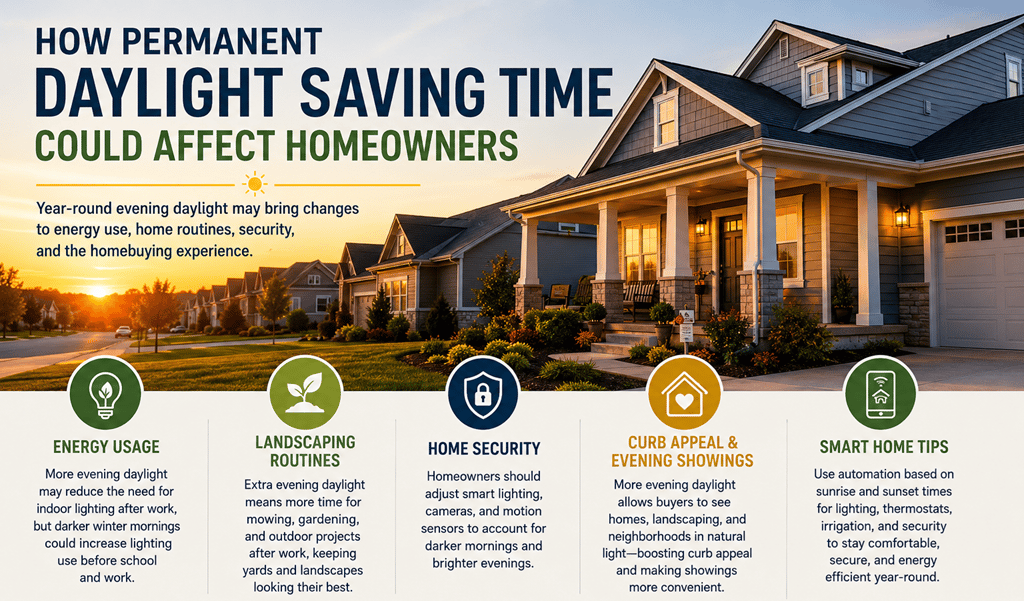
One of the biggest differences would likely be how households use energy. With more daylight available after work, many homeowners may delay turning on indoor lighting during the evening, which could slightly reduce electricity usage for lighting. On the other hand, darker winter mornings may increase lighting usage before people leave for work or school. In warmer climates, longer daylight hours may also encourage more outdoor activity later into the evening, which could increase air conditioning use during hotter months.
Landscaping routines could also shift. Many homeowners prefer mowing lawns, watering gardens, trimming shrubs, and completing other outdoor projects after work. An extra hour of daylight would simply provide more opportunities to complete those tasks without feeling rushed before sunset. Neighborhoods may appear more active during the evening, with homeowners spending additional time outside maintaining their properties.
From a real estate perspective, longer evening daylight could benefit both buyers and sellers. Evening home showings often fit more easily into buyers' work schedules, and homes generally present better when buyers can fully appreciate landscaping, exterior features, outdoor living spaces, patios, pools, decks, and curb appeal in natural daylight. Buyers may also feel more comfortable walking neighborhoods and evaluating nearby amenities while it's still light outside.
Home security habits may also evolve. Homeowners who use smart lighting systems, security cameras, and motion sensors would likely want to adjust their schedules to account for darker mornings and brighter evenings. Many smart home platforms already allow lighting and security systems to automatically adjust based on local sunrise and sunset times, making these transitions relatively easy to manage.
If permanent daylight saving time were adopted, homeowners should review their smart home routines, including exterior lighting schedules, security camera notifications, thermostat programming, irrigation timers, and outdoor lighting. Small adjustments can help maintain energy efficiency while keeping homes comfortable and secure throughout the year.
Ultimately, permanent daylight saving time would probably have a modest impact on most homeowners rather than a dramatic one. However, changes to daily routines, energy usage, curb appeal, and home technology are all factors worth considering if the policy ever becomes permanent.