How Massachusetts Malls Are Reinventing Themselves for the Next Generation
From thriving shopping destinations to mixed-use neighborhoods, Massachusetts malls are evolving in dramatically different ways. Some are expanding and adapting, while others are being transformed into entirely new communities built around housing, offices, restaurants, entertainment, and life sciences.
By Daniel Amodeo
President of Amo Realty
Published: July 27, 2026
For decades, shopping malls were among the busiest destinations in Massachusetts. Families spent entire afternoons shopping, eating in food courts, watching movies, and visiting department stores that served as major anchors.
Today, consumer habits have changed dramatically.
Online shopping has reduced demand for traditional retail space, department stores have disappeared, and developers have begun asking a new question:
What should become of these enormous properties?
Across Massachusetts, the answer has been different for nearly every mall.
CambridgeSide: From Mall to Mixed-Use Innovation District
Perhaps no mall better illustrates this evolution than CambridgeSide.
Rather than abandoning retail altogether, the property has embraced a mixed-use future.
The former Macy's department store is being redeveloped into approximately 360,000 square feet of laboratory, office, and retail space, while the mall's third floor has already been converted into 140,000 square feet of office and life science space. Future phases also include residential development while preserving retail and public gathering spaces.
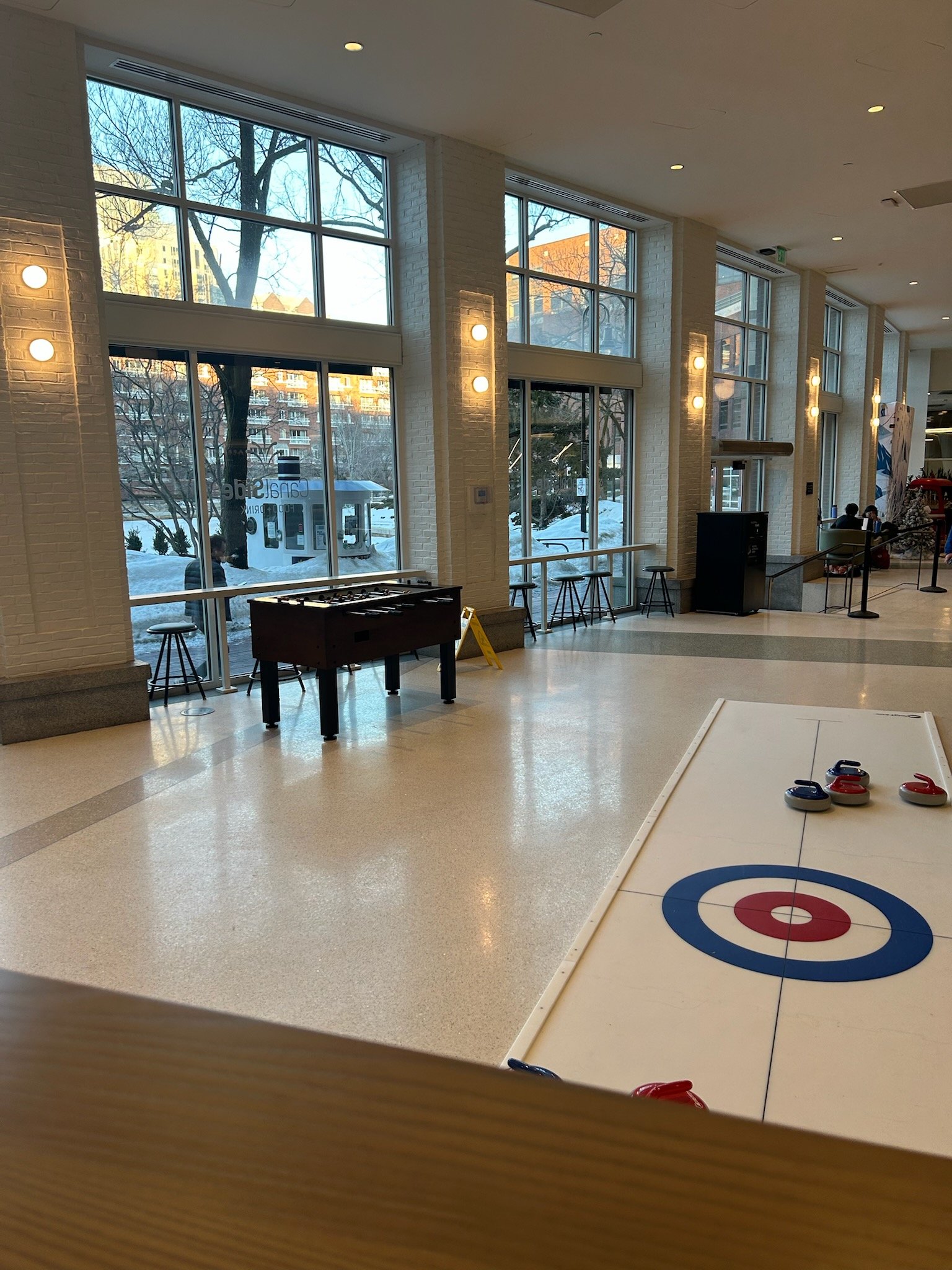
Even the traditional food court has been reinvented.
Today's CanalSide Food + Drink functions more like an upscale food hall, featuring local restaurants, a full-service bar, and gathering spaces designed to attract office workers, residents, and visitors throughout the day—not just shoppers.
CambridgeSide demonstrates that the future of many malls may not be less activity—but different activity.
CambridgeSide food court has been transformed into a food destination, with fun and games:
Burlington Mall Continues to Thrive
Unlike many malls around the country, Burlington Mall has remained one of New England's strongest retail destinations.
Instead of replacing the mall, Burlington is planning around it.
The town has approved a new Mixed Use Innovation District surrounding Mall Road, encouraging housing, offices, walkable development, restaurants, hotels, and public spaces while allowing Burlington Mall to remain the centerpiece of the district. Surface parking lots that once served only shoppers may gradually become higher-value mixed-use development.
Rather than viewing retail as obsolete, Burlington is expanding the district around successful retail.

Square One Mall Faces a Different Challenge
Not every mall has followed the same trajectory.
Square One Mall in Saugus still attracts shoppers, but like many traditional malls, it has experienced the loss of major department store anchors and increasing vacancies.
Its large site, excellent highway access, and established infrastructure make it a strong long-term redevelopment candidate if market conditions eventually support a broader mixed-use vision. Many industry observers see opportunities for future residential, medical, entertainment, or office uses alongside remaining retail.
Meadow Glen Mall Became Meadow Glen
One of Massachusetts' earliest redevelopment success stories occurred in Medford.
The former Meadow Glen Mall was transformed into Meadow Glen, replacing the enclosed mall format with a modern open-air shopping center anchored by retailers, restaurants, grocery stores, fitness uses, and updated streetscapes.
Rather than relying on enclosed corridors and department stores, the redevelopment embraced the type of shopping environment consumers increasingly prefer today.
Assembly Row Shows What Complete Reinvention Looks Like
Perhaps the most dramatic success story isn't a mall at all anymore.
Assembly Row transformed the former Ford assembly plant and surrounding industrial property into one of Greater Boston's premier mixed-use neighborhoods.
Today it features:
- More than 800,000 square feet of retail
- Over 1,500 apartments and condominiums
- More than 1 million square feet of office space
- Hotels
- Restaurants
- Entertainment
- Public parks
- MBTA Orange Line access
Assembly Row functions as an entire neighborhood where people live, work, shop, dine, and socialize—illustrating how mixed-use development can create activity throughout the day instead of relying solely on retail customers.
Other Massachusetts Malls Are Also Evolving
Massachusetts has several other malls adapting to changing consumer preferences.
Natick Mall has increasingly focused on experiential retail, upscale dining, fitness, and entertainment to complement traditional shopping.
Northshore Mall in Peabody has added restaurants, lifestyle tenants, and entertainment uses while continuing to attract national retailers.
South Shore Plaza remains one of New England's highest-performing malls thanks to its strong tenant mix, luxury retailers, restaurants, and continued investment by ownership.
Each property illustrates that successful malls are no longer simply shopping destinations—they're becoming places where people spend an entire afternoon or evening.
Why Mixed-Use Development Works
Traditional malls depended almost entirely on shoppers.
Mixed-use developments diversify that customer base.
Office workers arrive each morning.
Residents create activity every evening.
Restaurant customers visit throughout the day.
Retail benefits from every group simultaneously.
Instead of one reason to visit, mixed-use districts offer many.
That diversification often creates a far more resilient real estate investment than retail alone.
The Future of Massachusetts Malls
Massachusetts demonstrates that there is no single blueprint for mall redevelopment.
Some properties, like Burlington Mall and South Shore Plaza, continue thriving while evolving around the edges.
Others, like CambridgeSide, are becoming life science and mixed-use destinations.
Some, like Meadow Glen, abandoned the enclosed mall concept entirely.
And projects like Assembly Row show that former retail and industrial properties can become entirely new neighborhoods.
Rather than asking whether malls are dying, developers are increasingly asking a different question:
What is the highest and best use for these valuable properties over the next fifty years?
Final Thoughts
Massachusetts has become one of the country's best case studies for mall redevelopment.
Instead of watching these large properties become obsolete, developers are transforming them into destinations that combine retail, restaurants, offices, housing, entertainment, healthcare, hotels, and life sciences.
The shopping mall is no longer just a place to buy products.
Increasingly, it's becoming a place where people can live, work, dine, and gather—and that evolution may ultimately prove more valuable than the traditional mall model ever was.