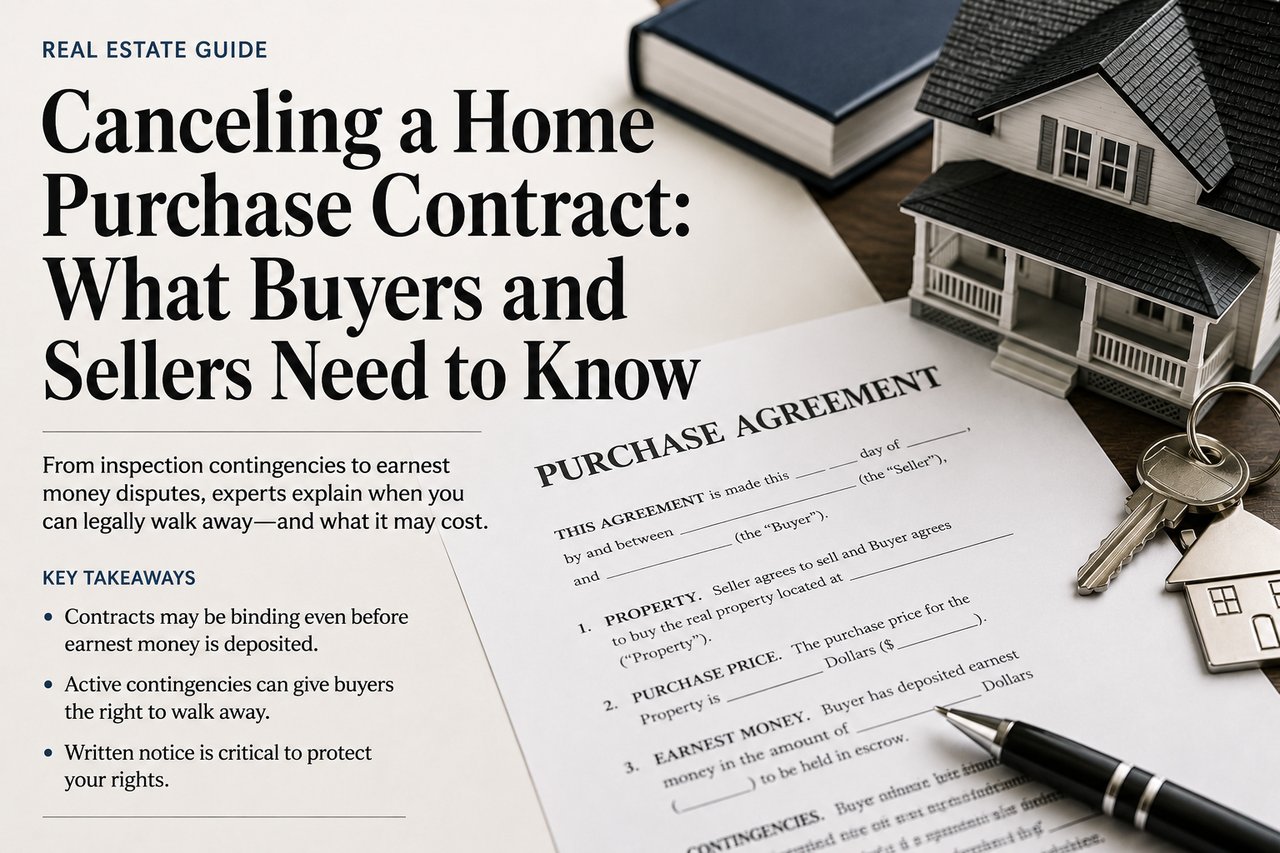
Understanding inspection contingencies, financing issues, earnest money, and the risks of backing out of a home purchase.
By Daniel Amodeo
President of Amo Realty
Published: July 27, 2026
Please note that real estate contract laws, forms, and procedures vary significantly by state. Buyers and sellers should always review their purchase agreement and consult their real estate agent or attorney regarding their specific transaction.
Buying a home is one of the largest financial commitments most people will ever make. Occasionally, circumstances change after a purchase agreement has been signed. A home inspection may uncover significant problems, financing may fall through, an appraisal may come in below the purchase price, or a buyer may simply begin having second thoughts. One of the most common questions buyers ask is whether they can legally cancel the contract without facing serious financial or legal consequences.
The answer is that it depends on the specific purchase agreement, applicable state law, and the facts surrounding the transaction. Real estate contracts are not identical across the country. States use different forms, deadlines, contingency language, and legal standards. Buyers should never rely on general advice found online without reviewing their own contract and consulting their real estate professional or attorney.
One area that often creates confusion involves earnest money deposits. Many buyers mistakenly believe that if they haven't yet delivered their earnest money, they aren't legally bound by the contract. In reality, that's not necessarily true. In many transactions, a fully executed purchase agreement creates enforceable obligations regardless of whether the earnest money has already been deposited. Whether a buyer can terminate depends on the contract itself—not simply whether the deposit has changed hands.
Inspection contingencies frequently provide buyers with one of the strongest contractual protections. During the inspection period, buyers may have the ability to negotiate repairs, request credits, or terminate the agreement if inspection results are unsatisfactory. However, the exact scope of these rights varies from state to state and from contract to contract. Missing a contingency deadline or failing to provide proper written notice can eliminate important protections, even if legitimate concerns exist.
Financing contingencies are another common safeguard. If a buyer makes a good-faith effort to obtain financing but is ultimately denied according to the terms of the contract, the buyer may have the right to terminate without forfeiting the earnest money. Appraisal contingencies can also provide protection when a lender's appraisal comes in below the agreed purchase price, although the available remedies depend on the contract language.
Many buyers worry that canceling a purchase agreement automatically means they'll be sued. While lawsuits are certainly possible, the practical reality is often different. Litigation is expensive for both parties, and many residential disputes are resolved through negotiations over the earnest money deposit rather than lengthy court proceedings. Sellers evaluate factors such as market conditions, financial damages, legal costs, and the likelihood of finding another buyer before deciding whether litigation makes sense.
When exercising any contractual right to terminate, buyers should carefully follow the notice requirements contained in the purchase agreement. Most contracts require written notice delivered within specific deadlines. Verbal conversations, text messages, or assumptions that everyone is "on the same page" may not satisfy contractual requirements. Buyers should also avoid making unnecessary admissions or emotional statements that could complicate future negotiations.
The best way to avoid problems is to understand the purchase agreement before signing it. Buyers should ask questions about contingency periods, financing deadlines, inspection rights, earnest money procedures, and termination provisions at the beginning of the transaction rather than waiting until a problem arises. Every real estate transaction is unique, and understanding the contract can help buyers make informed decisions while reducing unnecessary legal risk.