Can Landlords Charge Work-From-Home Fees?
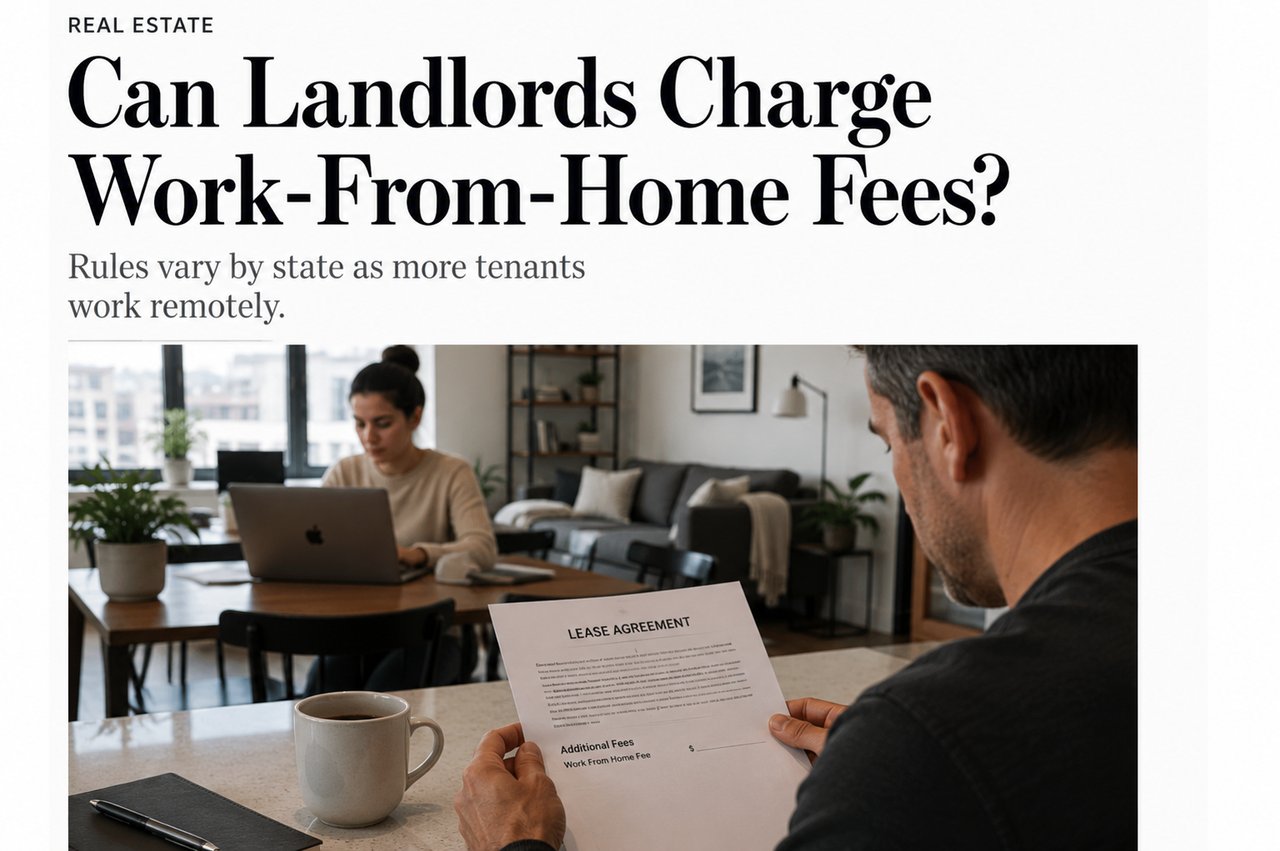
As remote work has become more common, some landlords have experimented with charging tenants a separate "work-from-home fee." The idea is that tenants who spend all day at home may use more electricity, heating or air conditioning, water, and internet while also creating additional wear and tear on the property.
The answer is: it depends.
Whether a landlord can charge one depends on the laws of the state or municipality where the rental property is located, as well as how the fee is structured and disclosed in the lease.
For example, Massachusetts has some of the country's strictest landlord-tenant laws regarding fees. State law limits the upfront charges landlords may collect when a tenant moves in, so a separate work-from-home fee could raise legal issues depending on how it is imposed. Other states may provide landlords with more flexibility, provided the fee is lawful and properly disclosed.
Beyond the legal considerations, landlords should also consider the business implications. Many prospective tenants view work-from-home fees as another "junk fee," which can make a rental less competitive. In many cases, it may be simpler and more transparent to build anticipated operating costs into the monthly rent instead of adding a separate surcharge.
For tenants, it's important to read the lease carefully before signing. If you see a work-from-home fee, ask what it covers, whether it is negotiable, and whether it complies with applicable state and local laws. Because landlord-tenant laws vary significantly, both landlords and tenants should consult a qualified real estate attorney if they have questions about the legality of a particular fee.
Disclaimer: This article is for informational purposes only and should not be considered legal advice. Landlord-tenant laws vary by state and locality. Consult a qualified attorney regarding your specific situation.
About Amo Realty
Founded in 2007, Amo Realty is a real estate brokerage with offices serving 14 states across the United States. We work with thousands of landlords, investors, buyers, sellers, and tenants each year and regularly provide insight on residential and commercial real estate trends.