Buying a House Sight Unseen: Everything Homebuyers Should Know
What to research before making an offer, how to reduce your risk, and when buying remotely actually makes sense.
By Daniel Amodeo
President of Amo Realty
Published: July 27, 2026
Over the past several years, buying a home without ever stepping inside has become far more common. Military relocations, job transfers, competitive housing markets, and advances in virtual tour technology have made it possible for buyers to purchase homes from hundreds or even thousands of miles away.
While buying a house sight unseen can absolutely work, it also introduces risks that simply don't exist when you can physically tour a property. Photos and videos provide valuable information, but they cannot replace seeing a home with your own eyes. Understanding what technology can and cannot show is one of the most important parts of making a smart buying decision.
Before considering a remote purchase, buyers should begin by making a checklist of unanswered questions. Listing photos rarely tell the complete story. Buyers should gather information about the age and condition of the roof, HVAC system, plumbing, electrical system, windows, and major appliances. It's also important to ask about recent repairs, known defects, utility costs, neighborhood traffic, parking, internet service, and anything else that could affect day-to-day living.
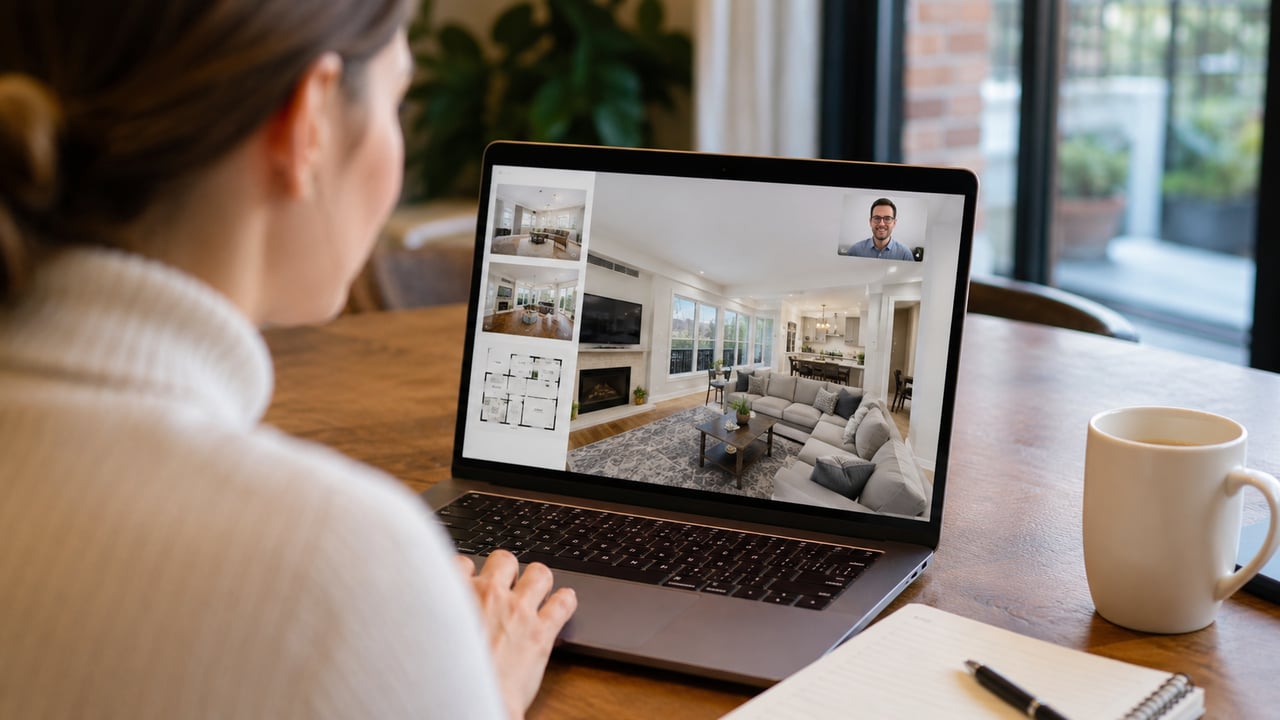
A live video walkthrough is one of the most valuable tools available to remote buyers. Unlike professionally edited listing videos, a live showing allows buyers to control what they want to see. Ask the agent to open closets, zoom in on flooring, inspect ceilings for stains, operate windows and doors, walk around the exterior, and spend extra time on anything that raises questions. The more interactive the tour, the better.
Technology is extremely helpful, but it has limitations. Wide-angle camera lenses can make rooms appear significantly larger than they actually are. Bright lighting and careful editing may minimize cosmetic imperfections. Perhaps most importantly, photos and videos cannot communicate smells, humidity, neighborhood noise, vibrations from nearby roads or rail lines, or the general atmosphere of the surrounding area.
Buyers should also spend time researching the neighborhood itself. Satellite imagery, street-view mapping, school ratings, flood zone information, local crime data, commute times, nearby commercial development, and zoning can all provide valuable insight before making an offer. Whenever possible, having a trusted friend, family member, or local real estate professional physically visit the property can provide another level of confidence that technology simply can't replace.
Purchasing sight unseen also makes contractual protections much more important. Inspection contingencies allow buyers to evaluate the property's condition after going under contract, while financing and appraisal contingencies may provide additional safeguards depending on the transaction. Buyers should carefully review all seller disclosures, paying close attention to previous water intrusion, structural repairs, foundation concerns, roof issues, mechanical systems, and any known defects. In some markets, additional sight-unseen forms or addendums may also be available.
Choosing the right real estate agent becomes even more critical during a remote purchase. Buyers should work with an experienced local agent who is comfortable representing long-distance clients and who is willing to provide honest feedback rather than simply encouraging a sale. A good buyer's agent should point out both the strengths and weaknesses of a property while serving as the buyer's eyes and ears throughout the transaction.
Buying a house sight unseen does offer advantages. Military families, physicians, corporate employees, and buyers relocating across the country often have limited time to travel before closing. Investors also commonly purchase properties remotely because their focus is primarily on financial performance rather than personal lifestyle. In competitive markets, acting quickly can also help buyers secure desirable homes before they receive multiple competing offers.
At the same time, buyers should recognize the disadvantages. Virtual tours cannot reveal ambient noise from nearby highways, airports, trains, or neighbors. They can't detect cigarette smoke, pet odors, mold, or musty smells. Subtle structural concerns such as uneven floors, sticking doors, poor drainage, or signs of foundation movement may not be obvious until someone physically walks through the home. Even when the property meets expectations, some buyers experience buyer's remorse simply because they never had the opportunity to emotionally connect with the home before purchasing it.
For most buyers purchasing their primary residence, seeing the property in person remains the best option whenever practical. However, when circumstances make that impossible, careful research, strong contractual protections, experienced local representation, and a thorough inspection process can significantly reduce the risks of buying a home sight unseen.