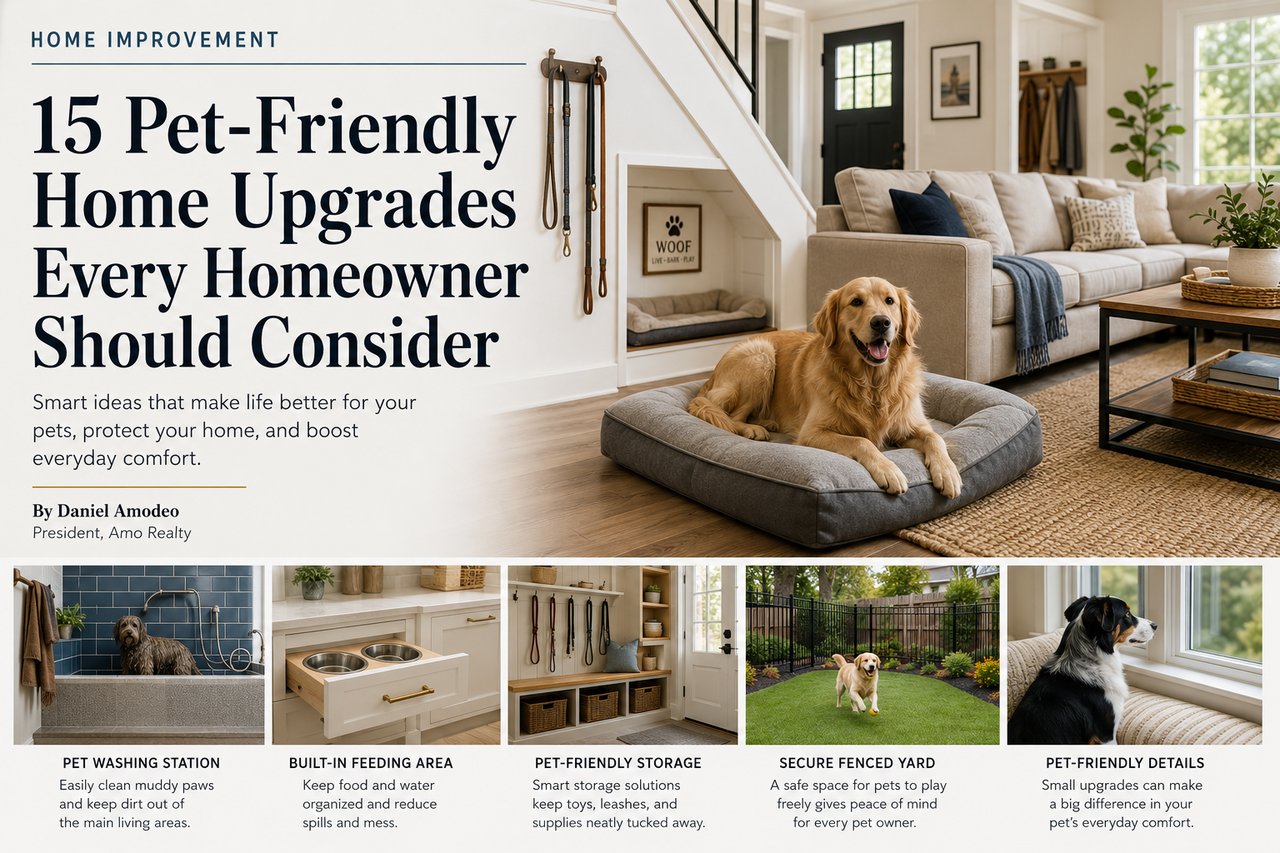
15 Pet-Friendly Home Upgrades Every Homeowner Should Consider
From durable flooring to thoughtfully designed outdoor spaces, these practical improvements can make daily life easier for both pets and their owners while helping protect your home's long-term value.
By Daniel Amodeo
President of Amo Realty
Published: July 27, 2026
For millions of Americans, pets aren't simply animals—they're family members. Dogs greet us at the door after work, cats curl up beside us at night, and many homeowners actively search for properties that accommodate the needs of their four-legged companions.
As a real estate broker, I've also noticed that buyers increasingly pay attention to features that make life with pets easier. While a pet-friendly home won't necessarily increase an appraisal, practical upgrades can make a property stand out to a large segment of buyers while making everyday life more enjoyable for current owners.
The good news is that creating a pet-friendly home doesn't require sacrificing style. Many of the best improvements also make homes easier to clean, easier to maintain, and more durable for years to come.
1. Choose Durable Flooring Instead of Carpet
One of the biggest challenges for pet owners is flooring.
Carpet tends to trap pet hair, absorb odors, and stain more easily from muddy paws or accidents. It can also become worn in high-traffic areas where dogs repeatedly run through the home.
Luxury vinyl plank flooring has become one of the most popular choices because it's water-resistant, highly durable, relatively affordable, and available in styles that closely resemble hardwood floors. Tile is another excellent option in kitchens, mudrooms, bathrooms, and entryways where moisture is common.
If replacing flooring isn't in the budget, professionally cleaning carpets before they develop long-term odors can also make a significant difference.
2. Install a Secure Fence
For dog owners, few upgrades provide more everyday value than a properly fenced yard.
A secure fence gives pets room to exercise while reducing the risk of escaping into nearby streets or neighboring properties. It also makes everyday routines easier since owners don't always need to rely on a leash every time the dog goes outside.
Before installing fencing, homeowners should verify local zoning requirements and HOA rules if applicable.
3. Create a Pet Washing Station
Anyone who's owned a dog knows what happens after a rainy walk.
Mud quickly finds its way onto hardwood floors, rugs, furniture, and carpeting.
A dedicated pet washing station in a mudroom, laundry room, basement, or garage can dramatically reduce the amount of dirt tracked through the house. Even a simple handheld sprayer with durable tile flooring nearby can make cleanup much easier.
For homeowners planning a renovation, incorporating a small pet shower has become an increasingly popular feature.
4. Upgrade to Washable Interior Paint
Pet owners quickly discover that walls collect more than fingerprints.
Dogs often shake water onto walls, cats brush against corners, and excited pets occasionally leave muddy marks near entrances.
Using high-quality washable paint allows homeowners to easily wipe away everyday marks without damaging the finish.
This simple upgrade can keep walls looking fresh for years.
5. Design a Dedicated Feeding Area
Pet bowls have a tendency to migrate throughout the kitchen.
Designating a specific feeding station creates a cleaner appearance while helping contain spills and water splashes.
Some homeowners even incorporate built-in feeding drawers or recessed bowl stations during kitchen renovations, allowing food and water bowls to remain organized without becoming obstacles.
6. Improve Indoor Air Quality
Pet hair and dander naturally accumulate over time.
Replacing HVAC filters regularly, using quality air purifiers, and scheduling periodic duct cleaning can improve indoor air quality while reducing odors.
These upgrades benefit everyone in the household—not just pet owners.
7. Protect Furniture with Performance Fabrics
Modern performance fabrics have become much more attractive than they were years ago.
Many resist stains, clean easily, and withstand scratching better than traditional upholstery.
Choosing durable fabrics can significantly extend the life of sofas, chairs, and sectionals in homes with active pets.
8. Add Better Storage for Pet Supplies
Leashes.
Treats.
Food containers.
Toys.
Grooming supplies.
Without proper storage, pet supplies quickly spread throughout the house.
Built-in cabinets, mudroom cubbies, or simple storage benches help keep everything organized while making daily routines easier.
9. Create an Outdoor Play Area
Dogs naturally wear paths through grass.
Rather than allowing the entire yard to become worn, many homeowners designate one section specifically for play.
Durable turf, gravel pathways, or reinforced grass areas can better withstand frequent activity while preserving the rest of the landscaping.
10. Install Scratch-Resistant Doors
Large dogs often scratch doors when excited to go outside.
Fiberglass doors and durable finishes tend to resist scratching better than softer painted wood surfaces.
Even adding kick plates or protective trim can help reduce long-term wear.
11. Improve Outdoor Lighting
Good exterior lighting benefits both homeowners and pets.
Motion-activated lighting improves visibility during late-night walks while making fenced yards safer after dark.
It's also a valuable security feature regardless of whether pets are present.
12. Choose Pet-Friendly Landscaping
Not every beautiful plant is safe for animals.
Before planting, homeowners should research whether flowers, shrubs, or mulch could be harmful if ingested.
Many families also choose hardy grasses that recover more easily from heavy use while avoiding sharp decorative rocks that can injure paws.
13. Build a Comfortable Pet Retreat
Just like people, pets appreciate having a quiet place to relax.
A small nook beneath a staircase, a cozy corner in a family room, or a dedicated built-in sleeping area gives pets their own space while keeping beds and blankets organized.
These areas can also reduce anxiety for animals during thunderstorms or gatherings.
14. Think About Window Placement
Many dogs enjoy watching the neighborhood.
Creating comfortable window access—whether through a built-in bench or strategically placed furniture—can provide entertainment without encouraging pets to scratch windowsills or blinds.
It's a small detail that many pet owners appreciate every day.
15. Plan for Future Buyers
More American households own pets today than ever before.
While buyers ultimately purchase homes based on location, layout, and price, practical pet-friendly features can create a positive impression and make everyday living easier.
Durable flooring, fenced yards, organized mudrooms, washable finishes, and thoughtful storage solutions appeal not only to current owners but also to many future buyers.
Final Thoughts
Making a home more pet-friendly isn't about filling every room with pet accessories.
The best improvements blend seamlessly into the home's design while making everyday life simpler for both pets and people. Whether you're planning to live in your home for decades or eventually put it on the market, thoughtful upgrades can improve comfort, reduce maintenance, and help protect one of your largest investments.