Indio, California Real Estate Statistics: Population, Housing & Growth Trends
Indio, California is one of the most interesting long-term real estate markets in Southern California’s desert region.
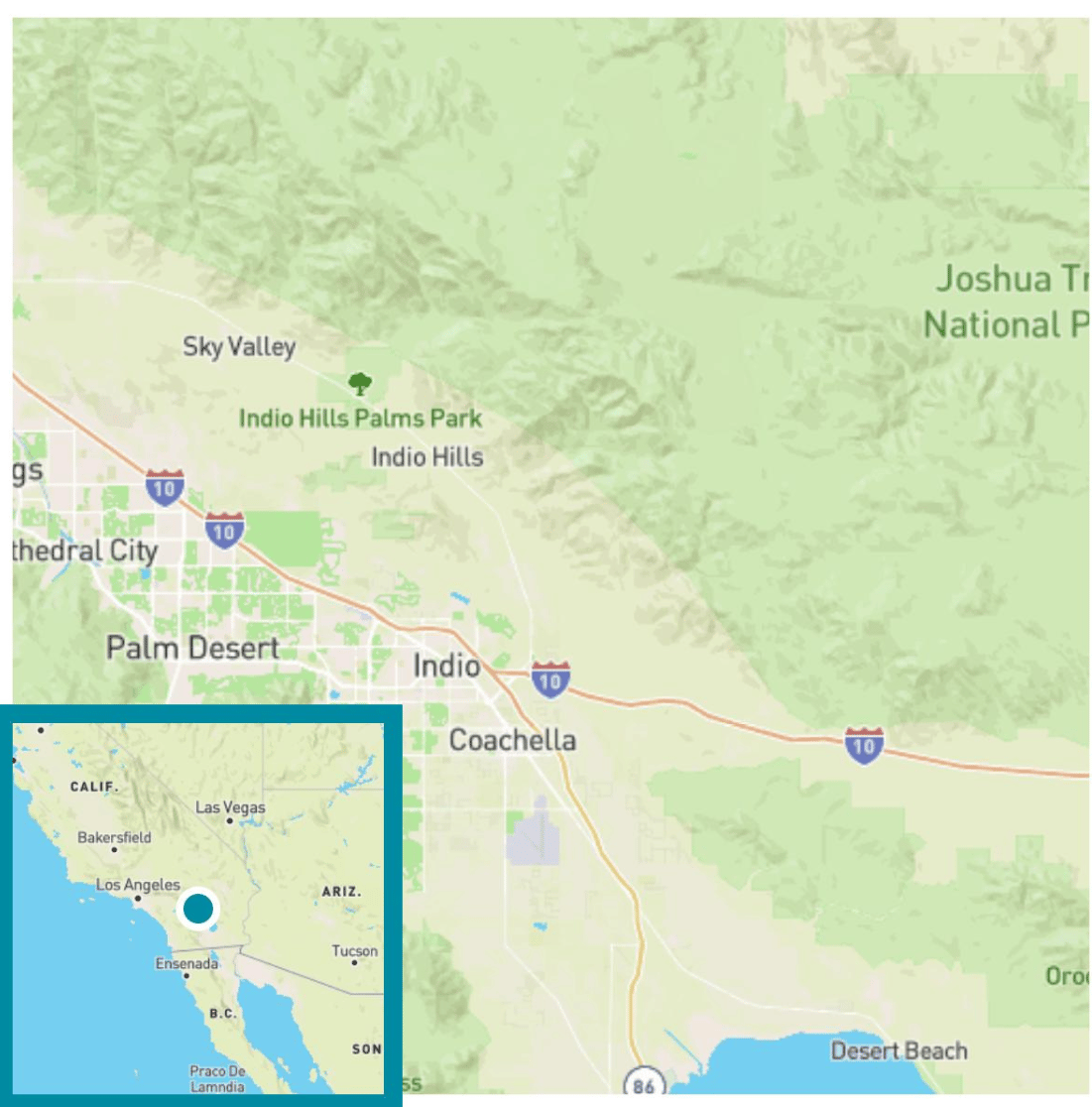
Located in the Coachella Valley, Indio combines strong population growth, comparatively attainable home prices and an established Southern California location near Palm Springs and within driving distance of Joshua Tree National Park.

Indio Population Growth
Indio’s population increased from 76,036 in 2010 to an estimated 94,269 in 2025 — approximately 24% growth in 15 years.
Indio population growth
Population increased approximately 24% from 2010 to 2025
Source: U.S. Census Bureau
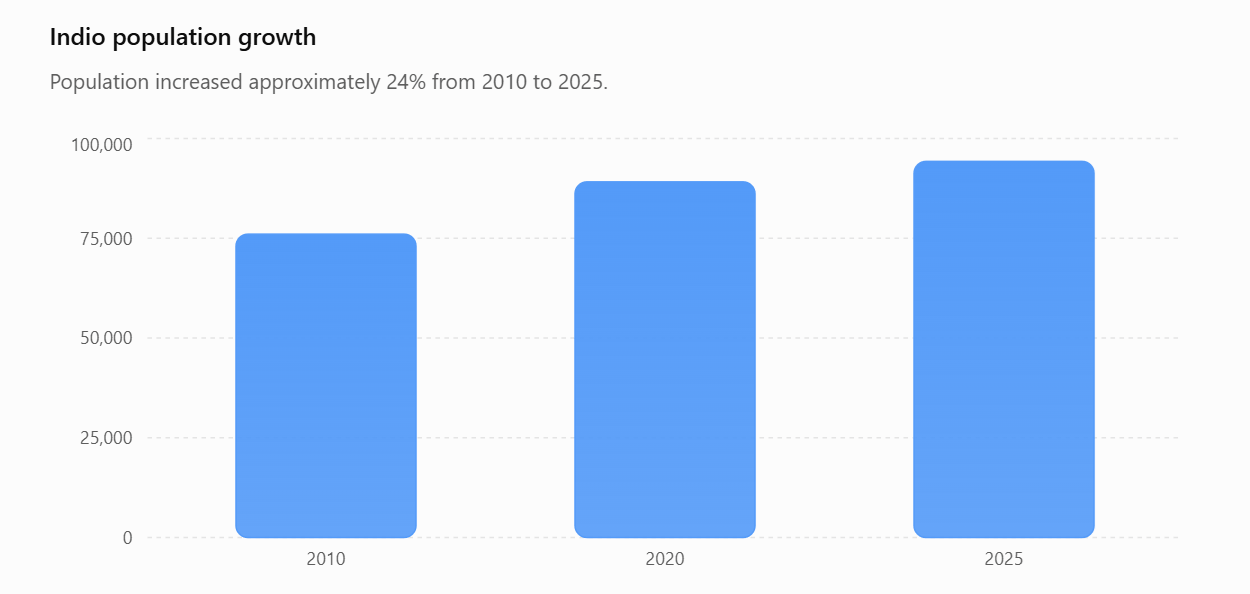
2010: 76,036
2020: 89,137
2025: 94,269
Population growth, 2010–2025: +24.0%
Source: U.S. Census Bureau.
Indio Housing Market
Indio remains relatively attainable compared with many of Southern California’s coastal housing markets.
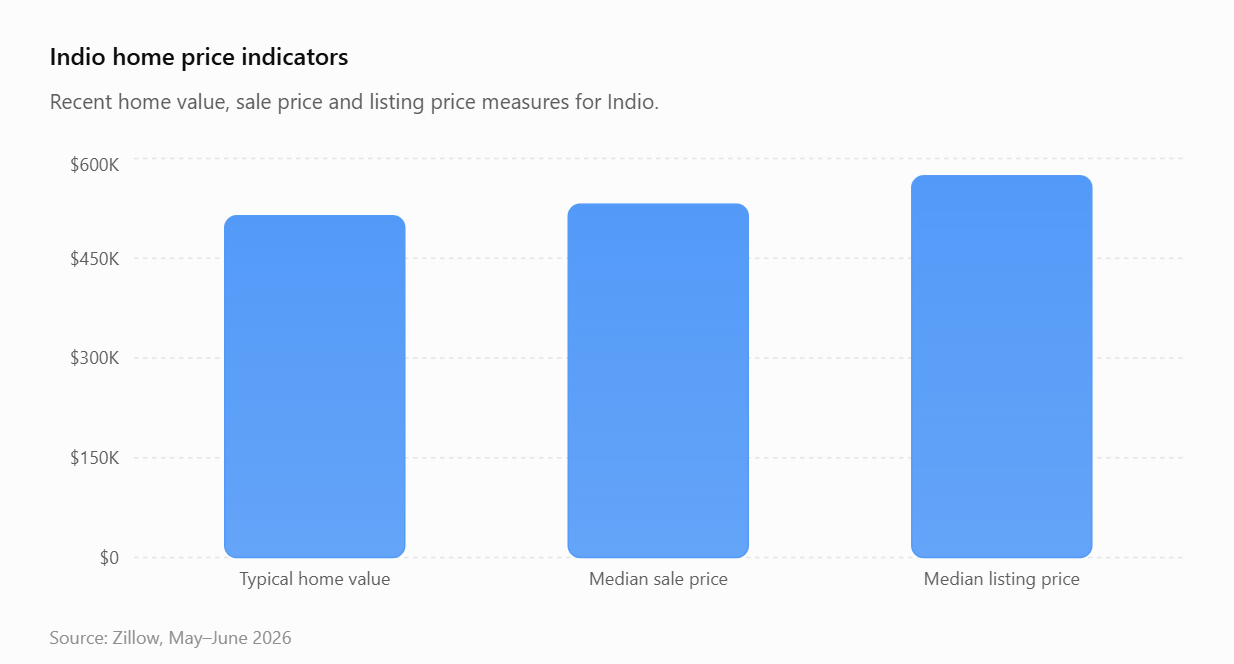
As of May–June 2026:
Typical home value: $513,884
Median sale price: $531,333
Median listing price: $574,000
Homes for sale: 517
Median days to pending: 42
Home values, 2015–2025: approximately +104% — Indio home values roughly doubled over the decade.
Interestingly, Indio’s typical home value was approximately 1.5% lower year-over-year as of June 2026.
That’s important because the long-term case for Indio isn’t based on chasing a market that is already exploding. It’s based on what could happen over the next decade as Southern California buyers continue looking farther inland for attainable housing.
Indio Rental Market
Indio’s average rent was approximately $2,616 per month in June 2026, compared with a national average of approximately $1,965.
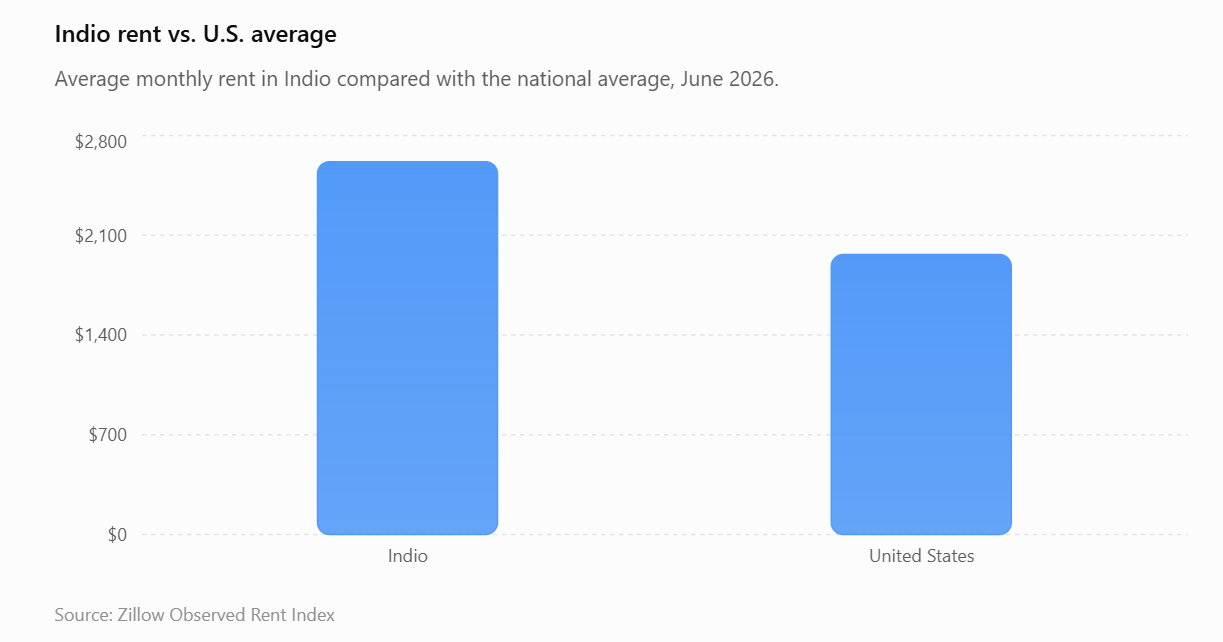
That puts reported average Indio rent approximately 33% above the national average.
Why Indio Is Worth Watching
Population growth: Indio has added more than 18,000 residents since 2010.
Relative affordability: Buyers can purchase homes at dramatically lower prices than in many coastal Southern California communities.
Location: Indio is part of the established Coachella Valley, alongside communities such as Palm Springs, Palm Desert and La Quinta.

Retirement demand: Approximately 18.6% of Indio residents are age 65 or older, according to Census data.
Long-term development potential: The eastern Coachella Valley still has room for additional residential and commercial development.
About Indio, California
Indio is a growing city in Riverside County's Coachella Valley in Southern California. Located approximately 20 miles east of Palm Springs and about 120 miles east of Los Angeles, Indio has developed from a small railroad settlement into the largest population center in the Coachella Valley.
For real estate buyers, Indio is particularly notable for its combination of newer residential development, established neighborhoods, resort and golf communities, relatively attainable Southern California housing and access to the amenities and attractions of the greater Coachella Valley.
History of Indio
Indio's modern history is closely connected to the expansion of Southern California.
The community developed as a railroad town in the 1870s as the Southern Pacific Railroad constructed its route between Los Angeles and Yuma, Arizona. The location provided an important stopping point in the desert for railroad operations.
Indio was formally incorporated on May 16, 1930, becoming the first incorporated city in the Coachella Valley.
Agriculture also played a major role in the area's early development. Irrigation allowed farmers to cultivate crops in the desert environment, and the Coachella Valley became particularly well known for date production.
Over time, Indio evolved from a railroad and agricultural community into a much larger residential and commercial center.
Indio's Growth
One of the most important parts of Indio's real estate story is its long-term population growth.
The city had 76,036 residents in the 2010 Census and 89,137 residents in the 2020 Census. The U.S. Census Bureau estimated Indio's population at approximately 94,269 in 2025.
That represents population growth of approximately 24% in only 15 years.
As Indio has grown, residential development has expanded along with the city's population. Newer subdivisions, gated communities, golf-oriented developments and traditional single-family neighborhoods give buyers a wide range of housing choices.
The City of Indio has also continued planning for future housing, commercial development and infrastructure as the community grows.
Indio Real Estate
Indio's housing market is diverse.
Buyers can find traditional single-family homes, newer construction, condominiums, gated developments, golf communities, active-adult communities and higher-end resort-style properties.
This variety is one reason Indio can appeal to several different groups of buyers.
Primary-home buyers may be attracted by the relative affordability compared with many coastal Southern California communities. Retirees can find communities designed around the desert lifestyle, while second-home buyers may be attracted by the area's golf, warm winters, festivals and proximity to other Coachella Valley destinations.
For investors, the market can include traditional long-term rentals as well as properties serving seasonal and vacation demand, subject to applicable local regulations and community restrictions.
New Construction and Development
New development is an important part of the Indio housing market.
Unlike many highly built-out coastal California communities, Indio and the surrounding eastern Coachella Valley have continued to accommodate substantial residential growth.
The City of Indio reports thousands of new housing units either under construction or in planning.
That creates an interesting real estate dynamic. Buyers are not limited to older resale housing stock, while existing homeowners and investors should also consider the effect that future housing supply may have on individual neighborhoods.
New construction can also bring additional retail, restaurants, services and infrastructure as population increases.
Downtown Indio
Downtown Indio represents another component of the city's long-term development strategy.
The city adopted its Downtown Indio Specific Plan in 2020. Planning efforts have focused on creating a more active mixed-use downtown while building upon the area's existing street and block network.
From a real estate perspective, downtown revitalization can be important because improvements to commercial districts, streetscapes, public spaces and surrounding development can influence how nearby residential and commercial properties are perceived over time.
As with any redevelopment initiative, individual projects and timelines can change, so buyers should evaluate current conditions rather than relying solely on proposed future development.
Highway 111 Corridor
Highway 111 has historically been one of the Coachella Valley's important commercial corridors.
Indio adopted a Highway 111 Corridor Specific Plan in 2022 covering properties along the corridor from Jefferson Street toward Indio Boulevard.
For real estate investors, major corridors such as Highway 111 are worth watching because future commercial development, redevelopment and transportation improvements can affect surrounding neighborhoods.
Residential buyers may also consider proximity to shopping, restaurants, employment and major roads when comparing different parts of Indio.
Indio and the Coachella Valley
Location is one of Indio's major advantages.
Indio is part of a larger network of Coachella Valley communities that includes Palm Springs, Palm Desert, Rancho Mirage, Indian Wells, La Quinta and Coachella.
This means an Indio homeowner is buying into more than an individual city. Residents have access to the broader valley's restaurants, shopping, golf courses, resorts, entertainment and outdoor recreation.
Palm Springs is approximately 20 miles west of Indio, while La Quinta directly borders the Indio area.
The broader desert location also provides access to Joshua Tree National Park and other recreational destinations in Southern California.
The "City of Festivals"
Indio is widely known as the "City of Festivals."
Major events held in the Indio area attract large numbers of visitors to the Coachella Valley each year. These events contribute to the region's tourism economy and create periods of substantial seasonal demand for lodging, restaurants and other local businesses.
Tourism can also influence real estate demand, particularly for second homes and vacation properties.
Investors considering short-term rentals should independently verify current City of Indio regulations, licensing requirements, HOA restrictions and other applicable rules before purchasing a property based on projected vacation-rental income.
Golf and Resort Communities
Golf and resort living are an important part of the greater Coachella Valley real estate market.
Indio contains and is surrounded by numerous golf-oriented and gated residential communities. Properties in these developments can offer amenities such as golf access, pools, clubhouses, fitness facilities and maintained common areas.
Buyers comparing these properties should consider HOA dues, community rules, age restrictions where applicable, golf membership costs and any limitations on rentals.
These costs can vary substantially from one development to another and should be evaluated alongside the purchase price.
Indio for Retirees and Second-Home Buyers
The Coachella Valley has long been associated with seasonal residents and retirees.
Indio's warm winter climate, golf communities, single-story housing options and comparatively attainable prices can make the city attractive to buyers looking for a desert retirement or second home.
Approximately 18.6% of Indio's population is age 65 or older, according to U.S. Census Bureau data.
Second-home buyers should consider not only purchase price but also property taxes, HOA fees, insurance, utilities, maintenance and how frequently they expect to occupy the property.
Indio's Economy
Indio serves as an important commercial center for the eastern Coachella Valley.
U.S. Census Bureau data shows approximately $1.77 billion in retail sales in Indio during 2022. Accommodation and food-service sales totaled approximately $420 million, while health care and social-assistance revenue was approximately $422 million.
The city's economy therefore extends beyond tourism alone.
For real estate, a diversified local economy matters because permanent employment and year-round services can help support demand for primary residences and long-term rental housing in addition to seasonal housing demand.
Transportation and Regional Access
Interstate 10 provides Indio with direct highway connections west toward the rest of the Coachella Valley and the Los Angeles metropolitan region and east toward the Arizona border.
Highway 111 serves as another important route through the Coachella Valley.
The city's location has influenced its development since the original railroad settlement and remains important today. For home buyers, access to major roads can be particularly relevant when comparing newer developments on the edges of the city with more established neighborhoods closer to central Indio.
Types of Homes in Indio
The Indio real estate market includes a broad selection of property types:
- Single-family homes
- New-construction homes
- Gated communities
- Golf-course homes
- Active-adult and retirement communities
- Condominiums
- Resort-style properties
- Second homes and seasonal residences
- Investment and rental properties
Because Indio contains both established neighborhoods and significant newer development, home ages, lot sizes, HOA structures and community amenities can differ considerably throughout the city.
What Home Buyers Should Consider in Indio
Home buyers should evaluate individual properties and neighborhoods rather than treating Indio as one uniform housing market.
Important considerations can include HOA fees and restrictions, age of the home, air-conditioning systems, energy costs, solar agreements, property insurance, flood zones, proximity to major roads, new construction nearby and any restrictions affecting rentals.
Desert properties can also have maintenance considerations that differ from coastal Southern California homes, particularly because of extreme summer temperatures.
Buyers interested in gated, golf or resort communities should carefully review HOA documents and recurring costs before purchasing.
Long-Term Indio Real Estate Outlook
Indio's long-term real estate story is closely connected to Southern California's broader housing affordability challenge.
Coastal Southern California contains some of the country's most expensive housing markets. As buyers search for alternatives, inland communities can benefit from households willing to trade proximity to the coast for lower purchase prices, newer housing and additional space.
Indio combines that relative affordability with substantial historical population growth and an established location within the Coachella Valley.
Future appreciation is never guaranteed, and housing markets can decline as well as increase. However, Indio's population growth, continued residential development, tourism economy, regional amenities and relative affordability make it a Southern California real estate market worth following over the coming decade.